Introduction
Standard PTFE (Polytetrafluoroethylene) was discovered by Roy J. Plunkett in 1938 and has since become one of the most widely used high-performance plastics in industrial applications. From chemical processing plants to medical devices, PTFE's exceptional chemical resistance and low friction properties make it indispensable.
However, standard PTFE has a well-known weakness: cold flow (also called creep). Under sustained mechanical load, PTFE will slowly deform and flow, which can compromise a seal over time. A gasket that was initially 5mm thick might compress to 4mm after months of service, creating a leaky seal that requires costly maintenance.
Expanded PTFE (ePTFE) solves this problem. By manipulating PTFE into a microporous, fibrillated structure, ePTFE combines the chemical inertness of PTFE with dramatically improved mechanical properties, making it the preferred choice for demanding flange sealing applications worldwide.
What Makes ePTFE Different?
Standard PTFE has a dense, solid molecular structure. When you compress it under a flange bolt load, it slowly yields and cold-flows over time. This phenomenon called creep means that a PTFE gasket initially compressed to proper thickness will gradually get thinner, eventually leading to leakage.
ePTFE is fundamentally different. The expansion process creates a unique node-and-fibril structure at the microscopic level — similar to a microscopic sponge with interlocking fibers. These fibrils act like millions of tiny springs, giving ePTFE its compressive resilience. Even under sustained load, ePTFE resists cold flow and maintains its seal integrity for years of reliable service.
Key Properties of Expanded PTFE
- Zero Cold Flow: The fibrillated structure eliminates creep — no permanent deformation under load, even after years of service
- Chemically Inert: Resists virtually all chemicals except molten alkali metals and elemental fluorine at high temperature
- Temperature Range: -260°C to +260°C continuous — suitable for both cryogenic and high-temperature applications
- Soft & Conformable: Seals irregular, warped, and slightly damaged flange surfaces without leaking
- No Hardening: Remains flexible and elastic at all temperatures within its operating range
- Easy to Cut: Can be die-cut, water-jet cut, or hand-cut to any shape on-site
- High Compressive Recovery: 95%+ recovery after compression — handles thermal cycling without losing seal integrity
- Samples: Available on request.
ePTFE vs Standard PTFE: A Comparison
While both materials share the same base chemistry, their performance in sealing applications is dramatically different. Standard PTFE's tendency to cold-flow makes it unsuitable for critical applications where long-term seal integrity is required.
| Property | Standard PTFE | Expanded PTFE (ePTFE) |
|---|---|---|
| Cold Flow / Creep | Yes — significant over time | No — negligible |
| Compressive Recovery | Low (40-60%) | High (95%+ recovery) |
| Sealability on Damaged Flanges | Poor — requires perfect surface | Excellent — conforms to imperfections |
| Microporous Structure | No — dense solid | Yes — node-and-fibril |
| Compressibility | Moderate | High — easy to compress |
| Thermal Cycling Performance | Degrades over cycles | Handles thermal cycling well |
Common Applications of ePTFE
ePTFE is most commonly used in three product forms:
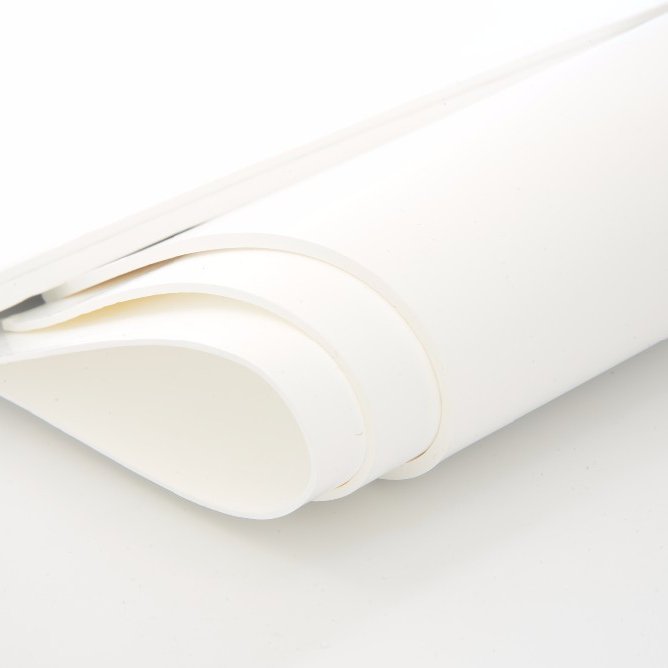
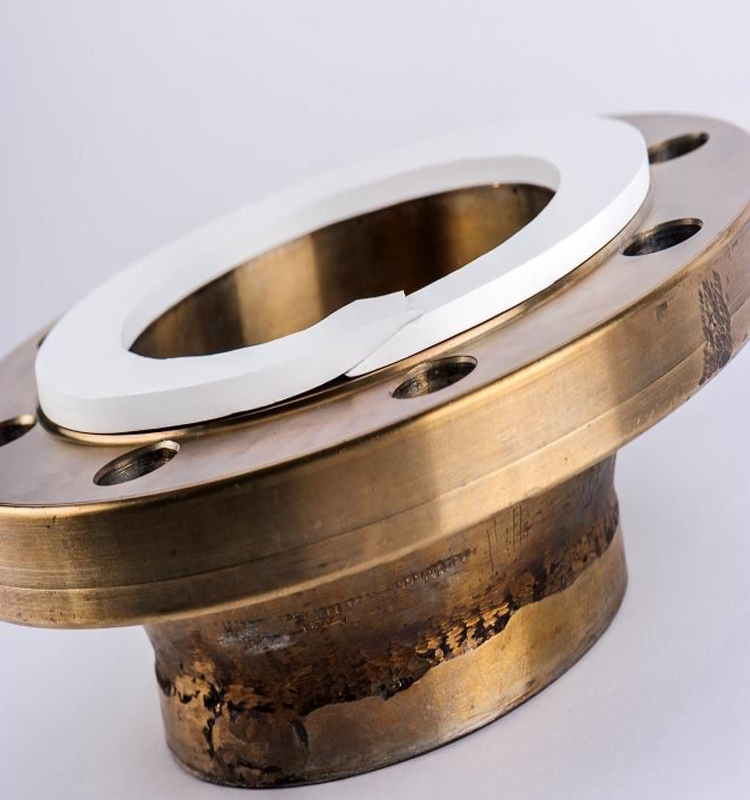
- ePTFE Sheet: Flat gaskets for raised-face (RF) and flat-face (FF) flanges. Available up to 1520×1520mm, cut to any size or shape.
- ePTFE Joint Sealant Tape: Compressed PTFE cord for wrapping pipe threads and sealing irregular or damaged flanges. Requires no cutting or measuring.
- Custom ePTFE Gaskets: Precision-cut shapes for any geometry — round, oval, rectangular, or irregular custom shapes per your drawings.
These products are widely used in chemical processing, oil & gas pipelines, semiconductor fabrication, and power generation facilities.
Conclusion
Expanded PTFE represents a significant advancement over conventional PTFE materials. Its unique microporous structure provides superior sealability, eliminates cold flow, and offers broader application flexibility. For demanding industrial sealing applications where reliability matters, ePTFE is the clear choice.
Whether you need sheet gaskets for standard flanges, custom-cut shapes for unique geometries, or joint sealant tape for quick on-site repairs, ePTFE products deliver the performance that standard PTFE simply cannot match.
← Back to Home